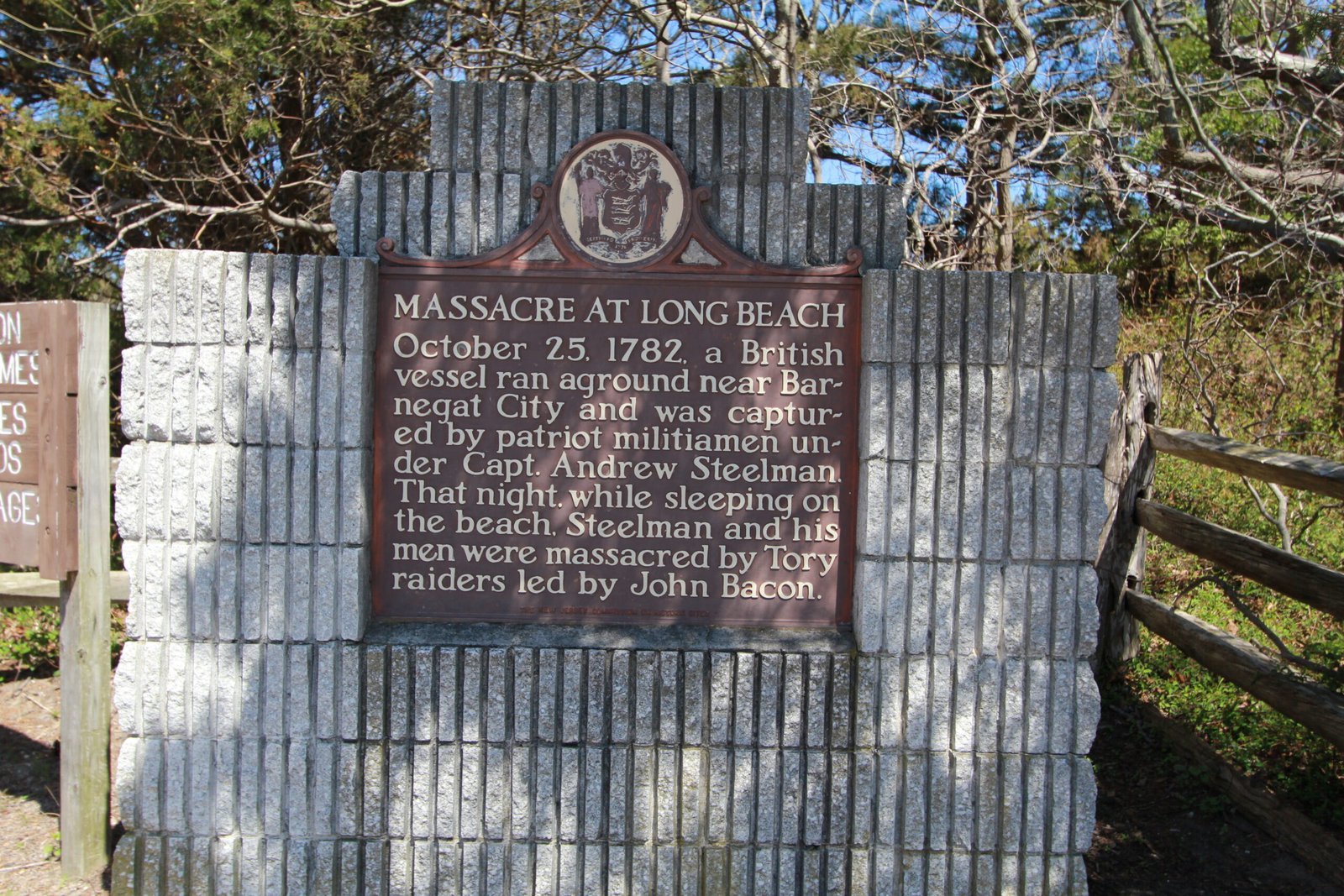
⚔️ The Massacre at Long Beach – October 25, 1782
Along the quiet sands of today’s Long Beach Island, one of the final violent moments of the American Revolution unfolded — a stark reminder that even as peace talks were underway, danger still lingered along New Jersey’s coast.
A Privateer Crew Caught Off Guard
By 1782, the war was effectively winding down, but the waters off the Jersey Shore remained a battleground. American privateers — local sailors licensed to capture British supply ships — continued to patrol the coast, disrupting enemy trade and bringing much‑needed goods into patriot hands.
One such vessel, the Alligator, had recently run aground near Long Beach. Its crew came ashore to camp for the night, unaware that a Loyalist raiding party was already tracking them.
The Night Attack
Before dawn on October 25, 1782, a group of Loyalists led by Captain John Bacon — a notorious figure along the Jersey coast — launched a surprise attack on the sleeping privateers. The assault was swift and brutal. Several men were killed on the spot; others were wounded or captured. The skirmish became known locally as the Massacre at Long Beach, a name that reflects both the suddenness of the attack and the lingering shock it left on coastal communities.
Aftermath and Legacy
Though small in scale compared to earlier battles, the incident symbolized the bitter divisions that persisted even as the Revolution neared its end. Bacon and his band continued to operate in the region for months, and the attack became part of the folklore of Long Beach Island — a story of danger, loyalty, and the thin line between patriot and outlaw.
Today, the site is remembered as one of New Jersey’s last Revolutionary War tragedies, a coastal footnote to a conflict that reshaped a nation.